Apie projektą:
Šalis: Lietuva
Plotas: 3100 m²
Pastato architektūra: DO ARCHITECTS su projekto vadove Gilma Teodora Gylyte
Pastato interjero dizainas: Akiko Tutlys, Jūratė Norkutė, Miglė Šalnaitė, Aurelija Slapikaitė, Vida Miškūnaitė-Jarošienė
ŠiMC – Šiuolaikinės Mokyklos Centro interjeras
Šiuolaikinės Mokyklos Centro projektas: kai architektūra kalba istorija, spalvomis ir muzika
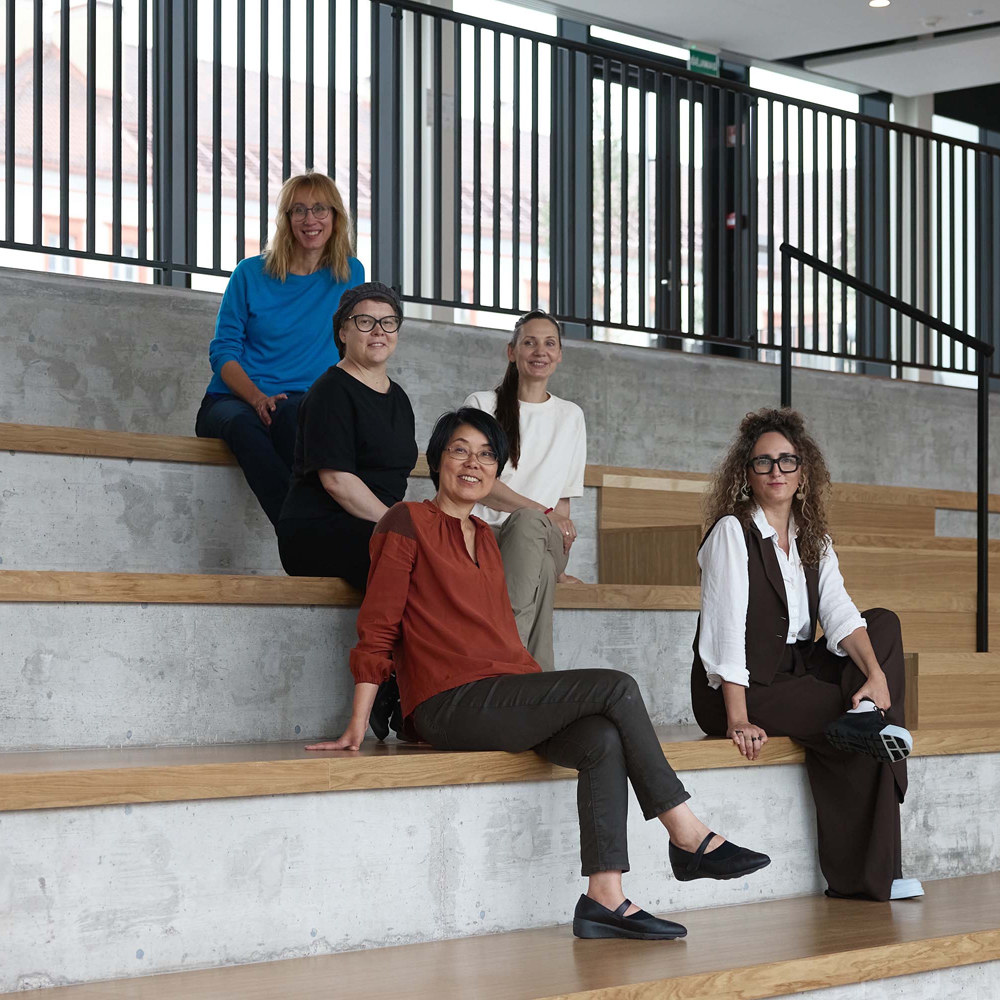
Kai penkios architektės iš ArchDesign x AForm Studio ėmėsi projektuoti Šiuolaikinės Mokyklos Centrą, jos neturėjo tikslo tiesiog „įrengti interjerą“. Per šešis mėnesius jos sukūrė 3100 kv. m erdvę, kurioje kasdien gyvena daugiau nei 490 mokinių ir 50 mokytojų. Čia ne tik klasės – tai gyvas, kvėpuojantis organizmas su dviem aukštais, mansarda, cokoliu, projektų erdve rūsyje ir net amfiteatru. Kiekvienas kampas kalba apie mokymąsi – bet ne bet kokį: kūrybišką, įtraukiantį, tarpdisciplininį.
Kaip yra sakęs žymus architektas Louis Kahn: „Mokykla prasidėjo, kai žmogus po medžiu paklausė klausimo. Architektūra turi tai įamžinti.“
Būtent tai čia ir įvyko.
Interjero šerdis – „Muzikos banga“
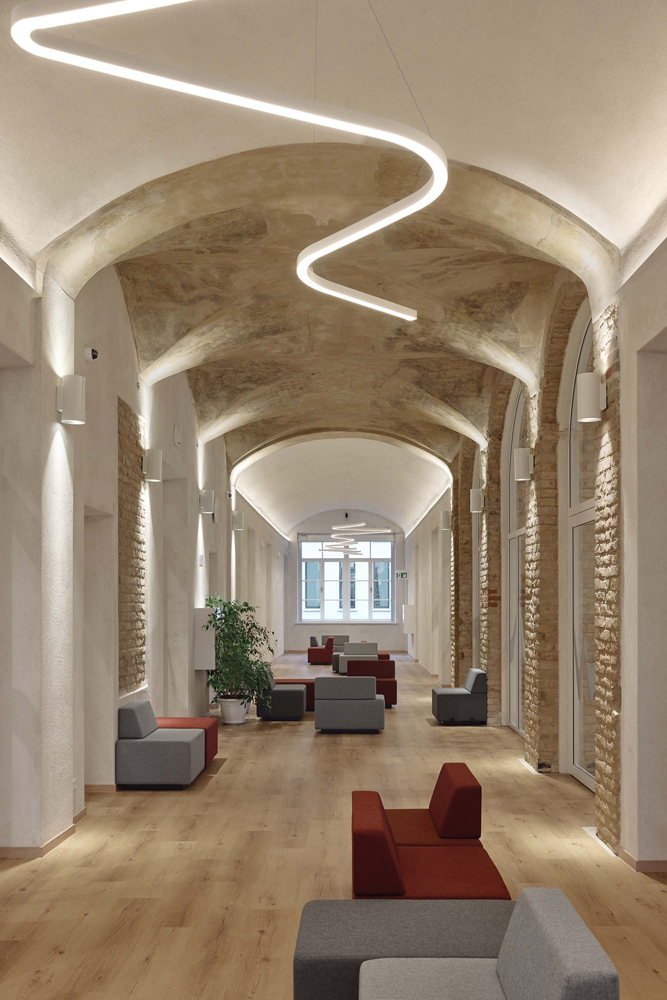
Čia mokslas neatskiriamas nuo meno. Muzika tapo ne papildomu užsiėmimu, o visos erdvės identitetu. Architektės pasitelkė mokyklos kurtą miuziklo priedainį ir perkėlė jį į interjerą – autoriniai šviestuvai atkartoja „muzikos bangą“, kurios ritmu alsuoja visa mokykla.
Spalvos kalba vaikų kalba
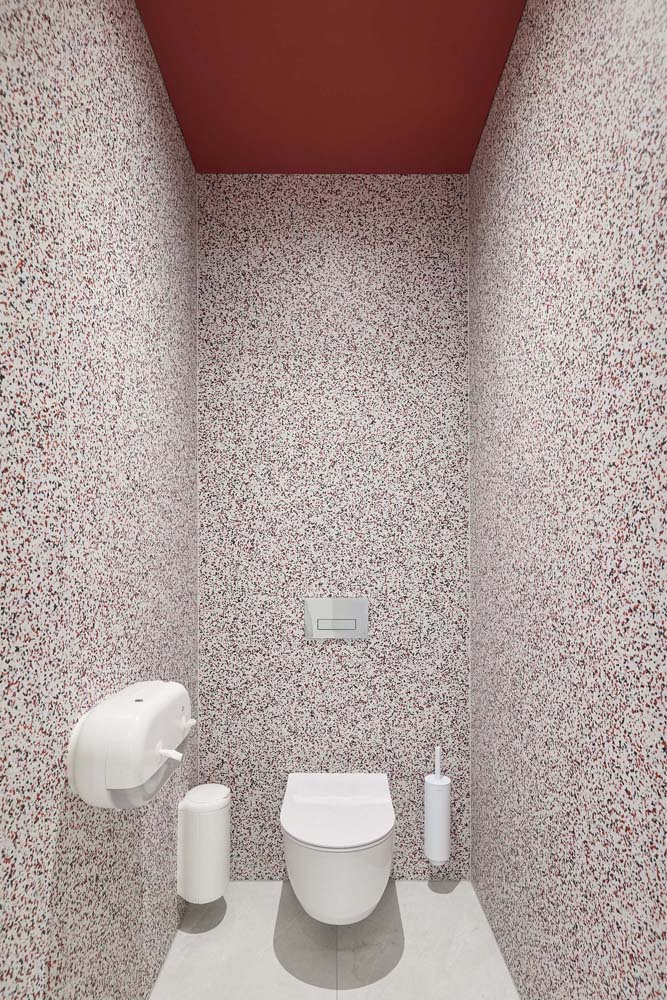
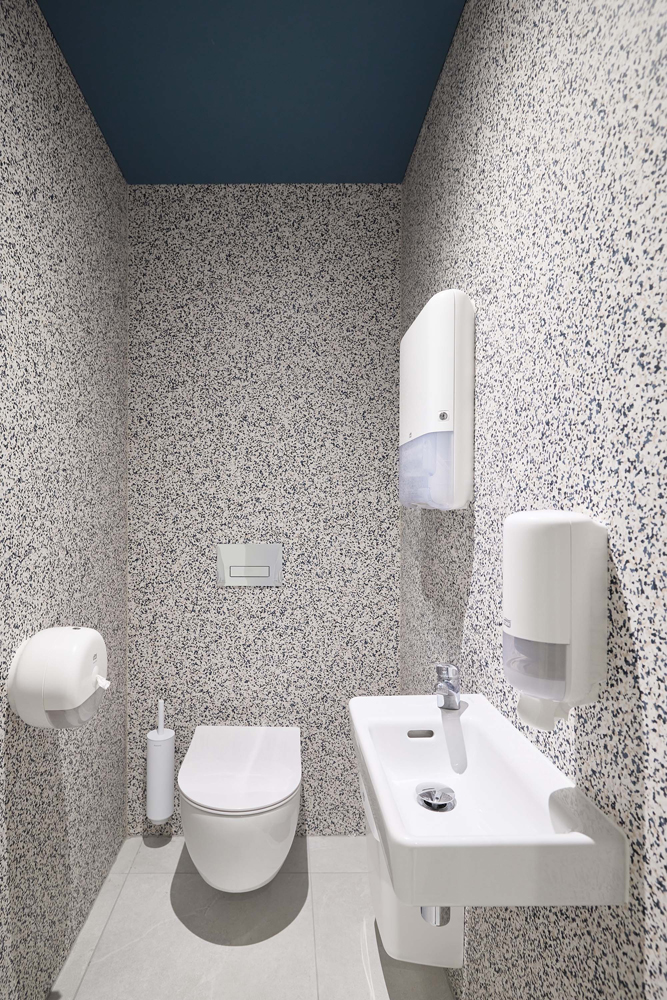
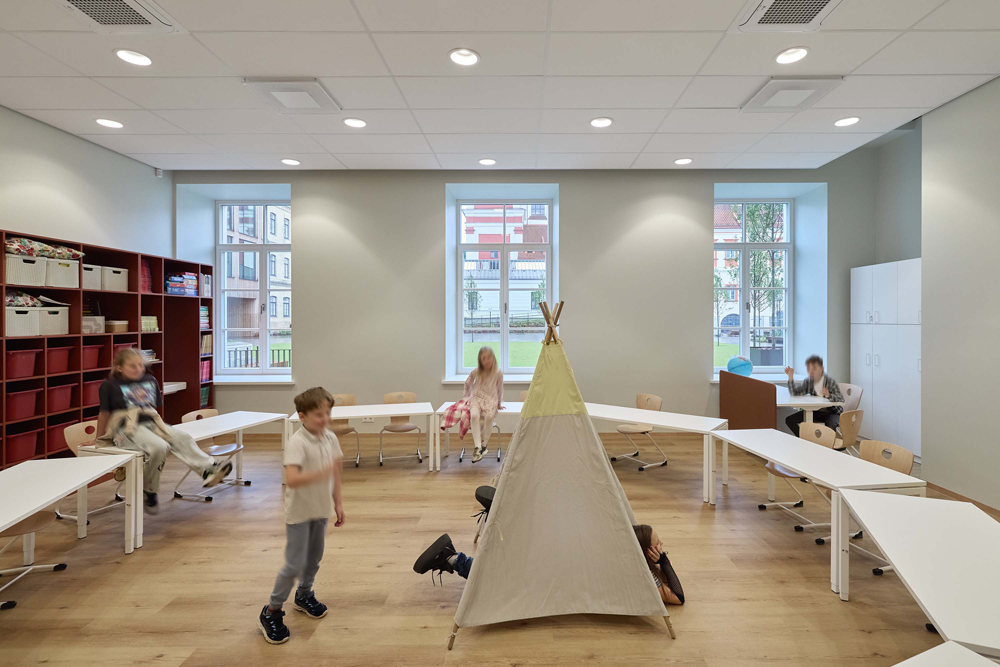
Erdvės pritaikytos skirtingo amžiaus vaikams – mažųjų zonose vyrauja energingos, aktyvios spalvos, o vyresniųjų – subtilesnės, padedančios susikaupti. Net tualetuose nestinga spalvų – nes čia spalva yra ne tik dekoras, o emocinė architektūros kalba, kuri lavina, džiugina ir skatina smalsumą.
Sienos, kurios pasakoja istorijas
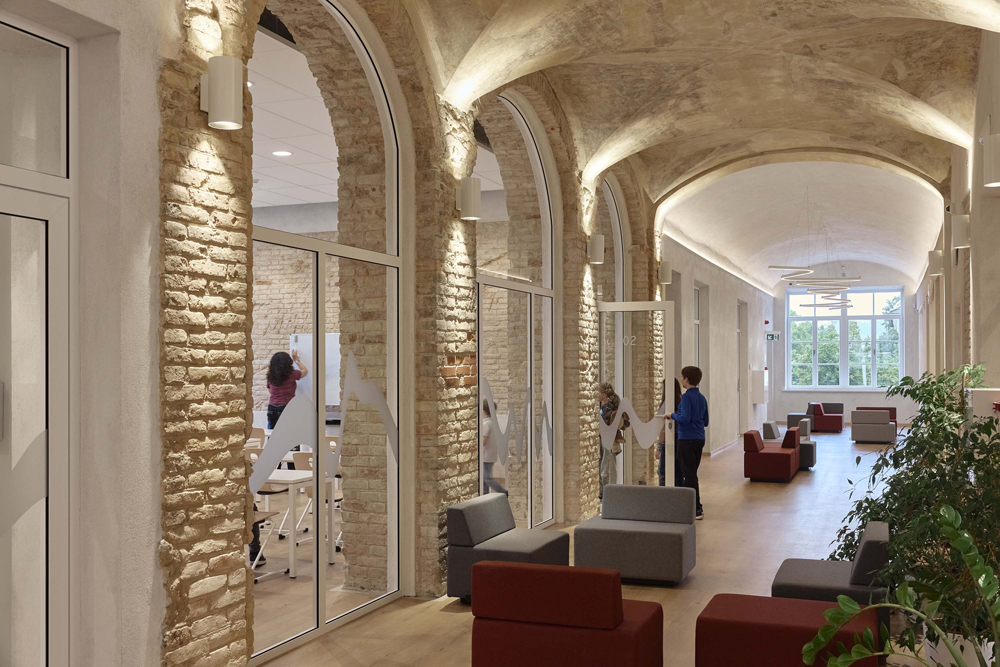
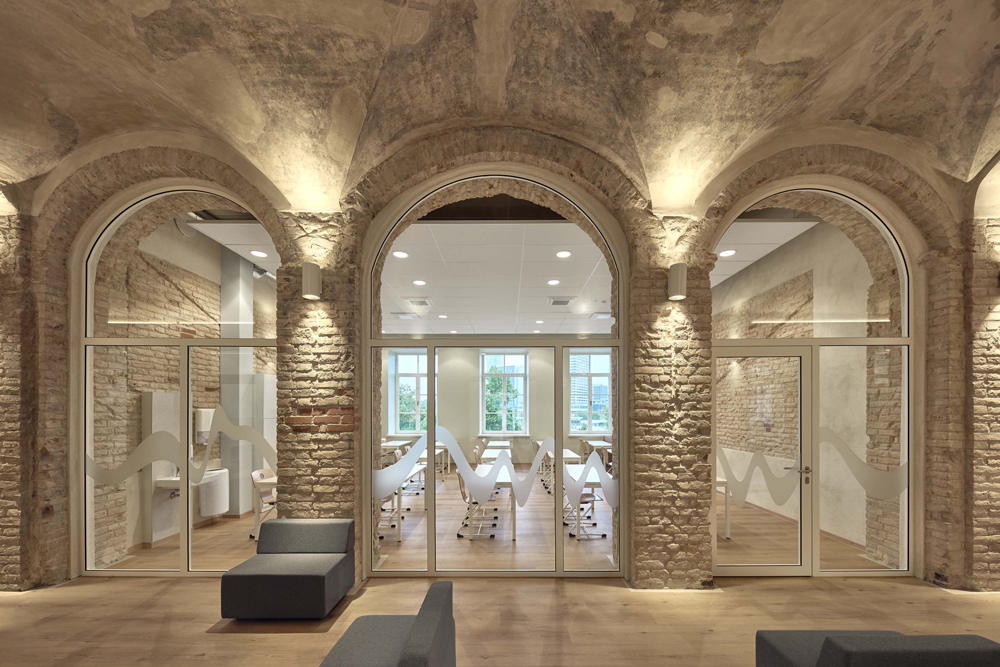
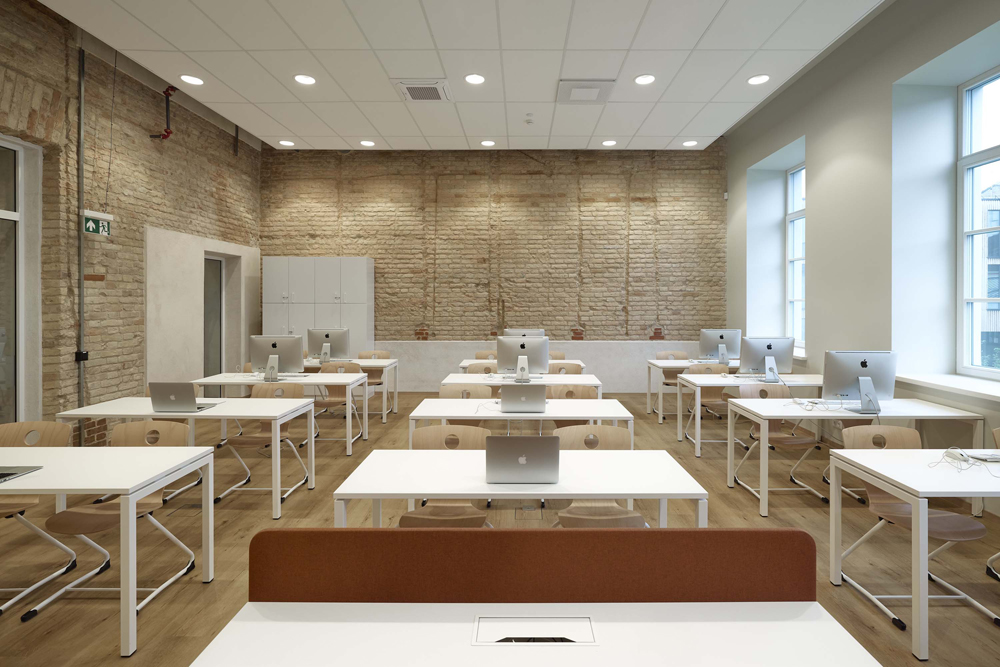
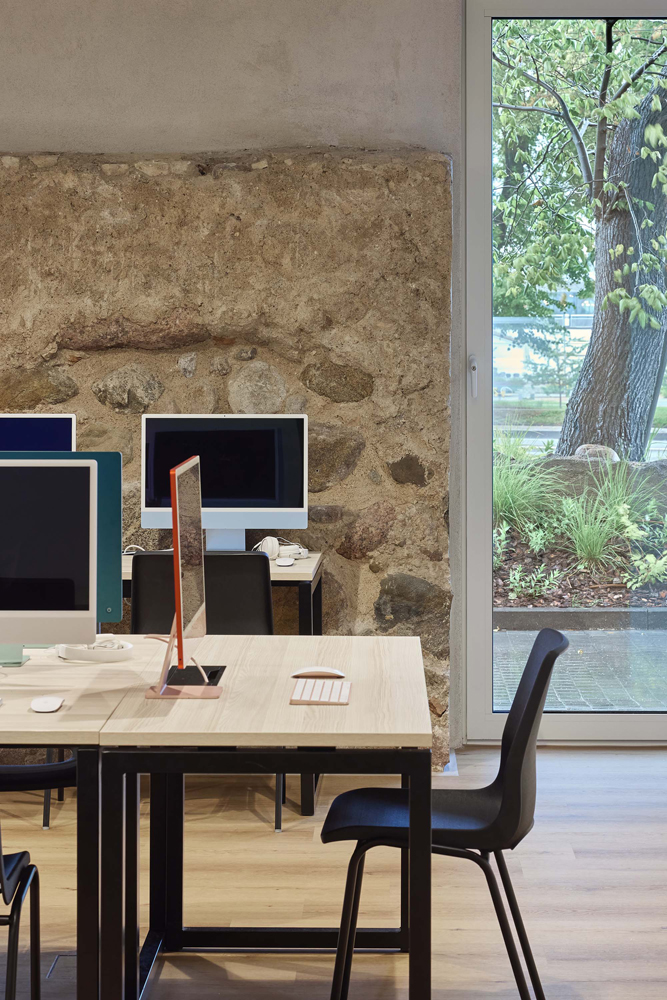
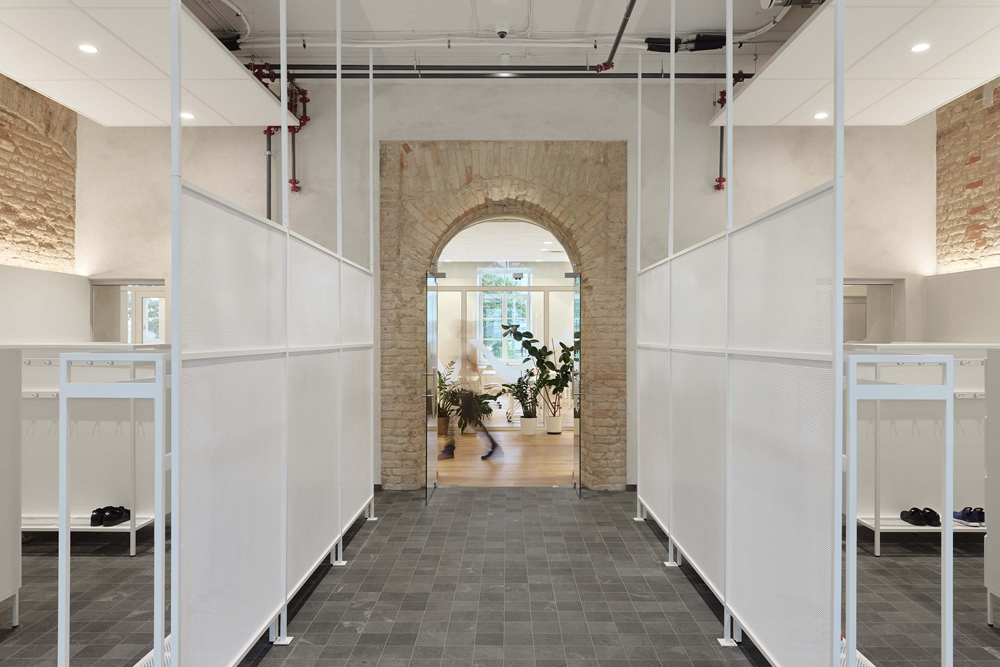
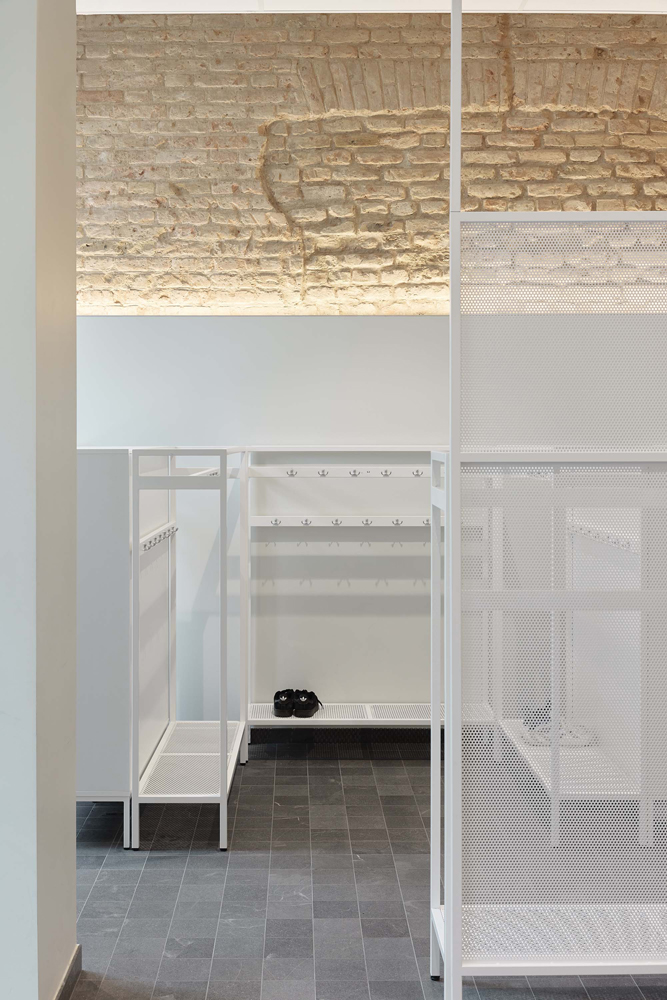
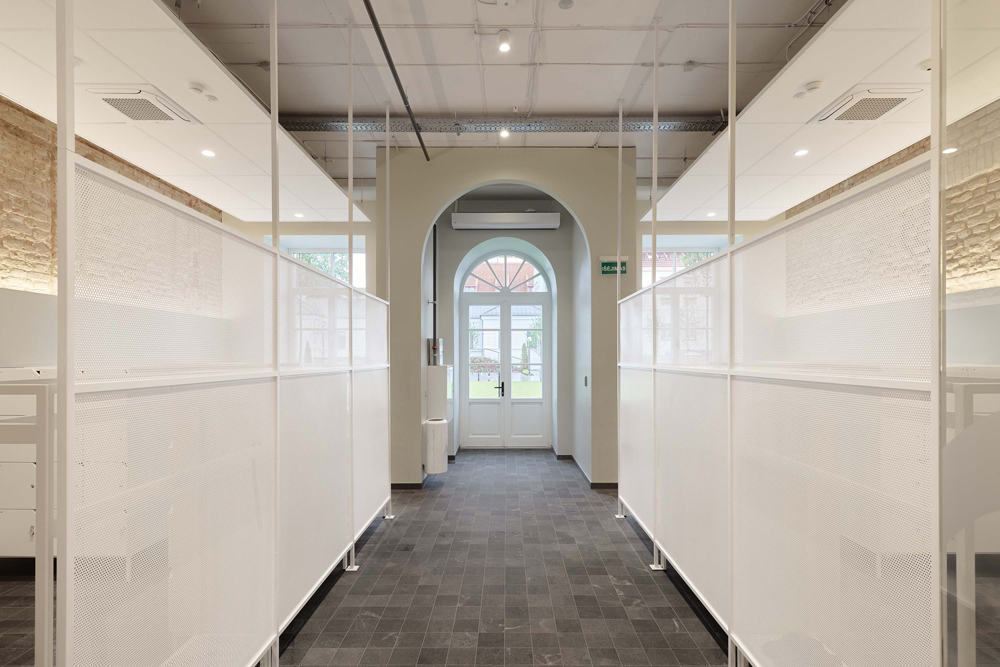
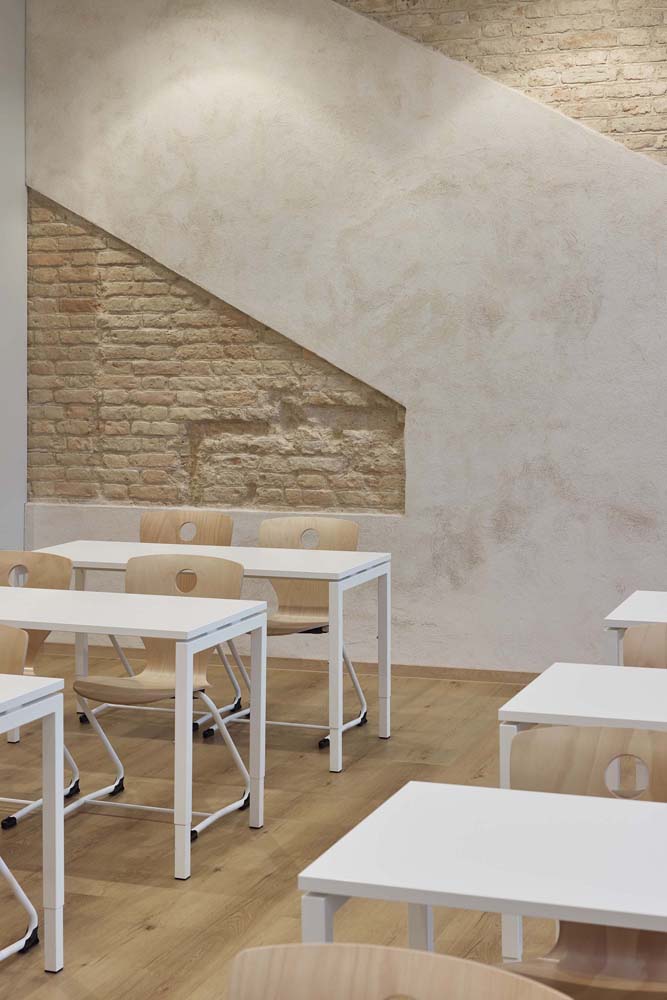
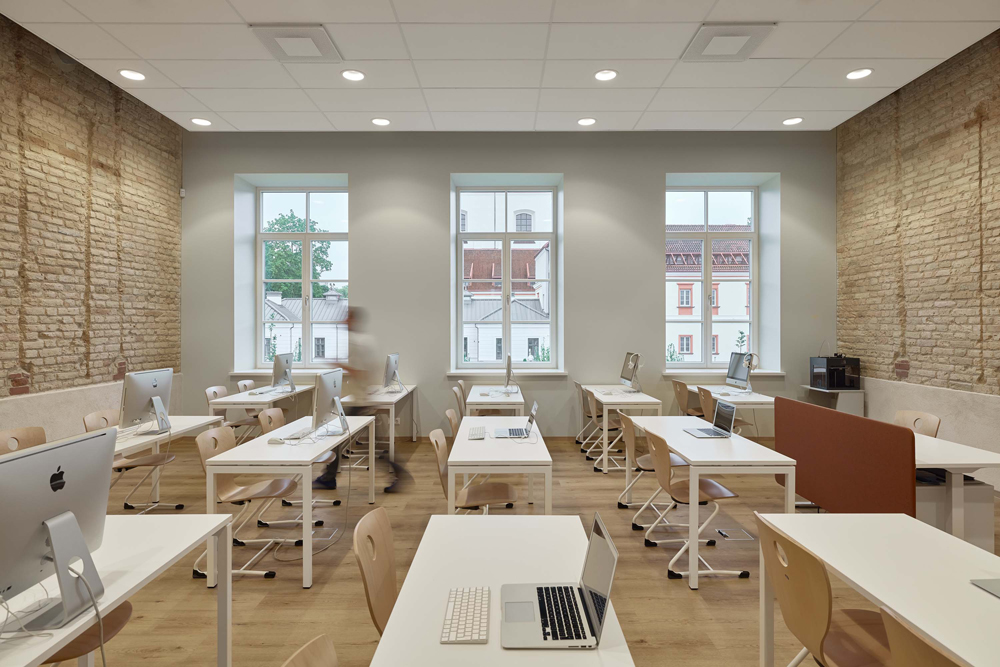
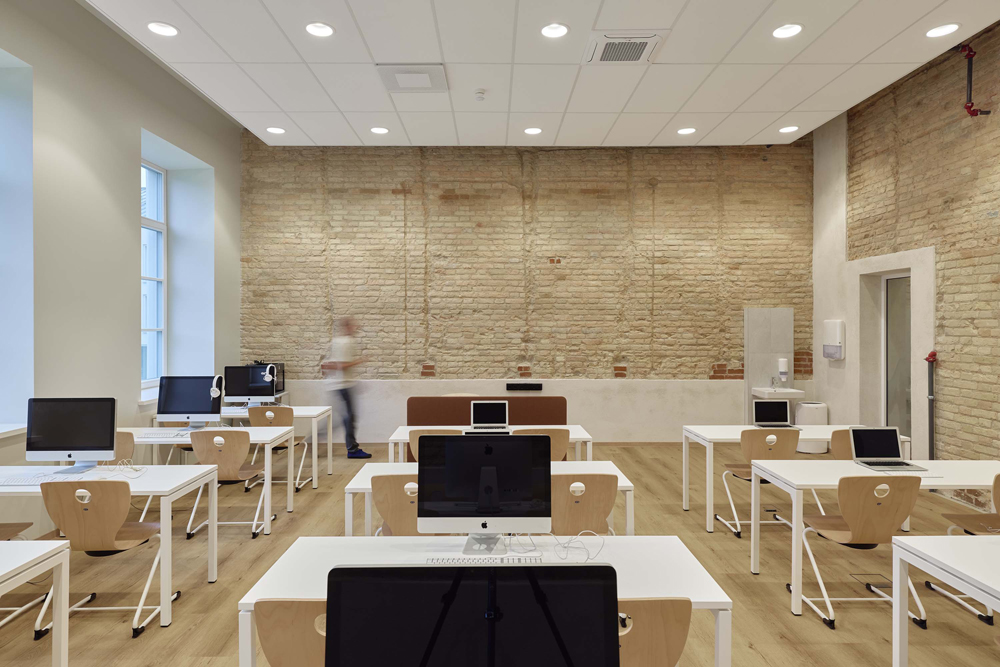
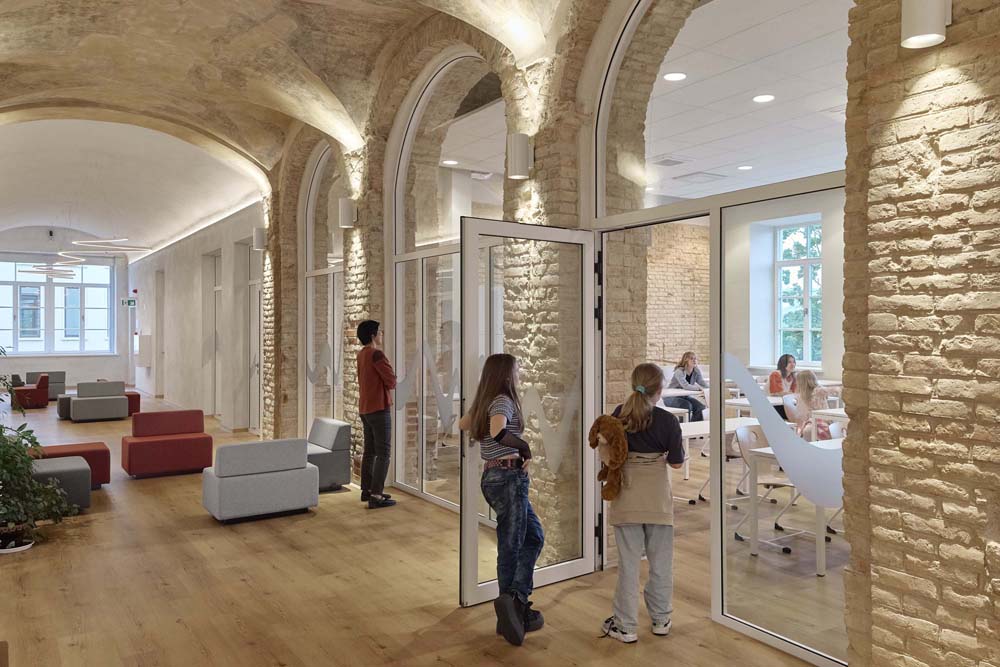
Kartu su architekte Aušra Gvildiene nuspręsta neslėpti istorijos – priešingai, ją parodyti. Atidengtos buvusios plytos, seno laiptų kontūro pėdsakai, atkurtos langų angos, naudotas kalkinis tinkas – toks pat, kaip Sapiegų rūmuose. Tokie sprendimai leidžia sienoms „kvėpuoti“, o kartu sukuria unikalią akustiką.
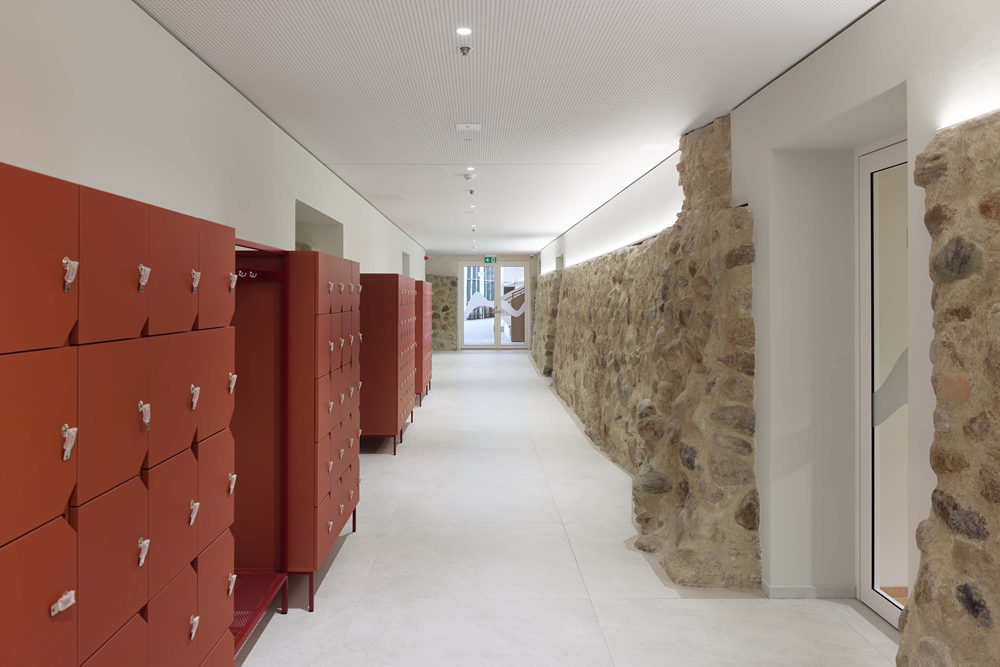
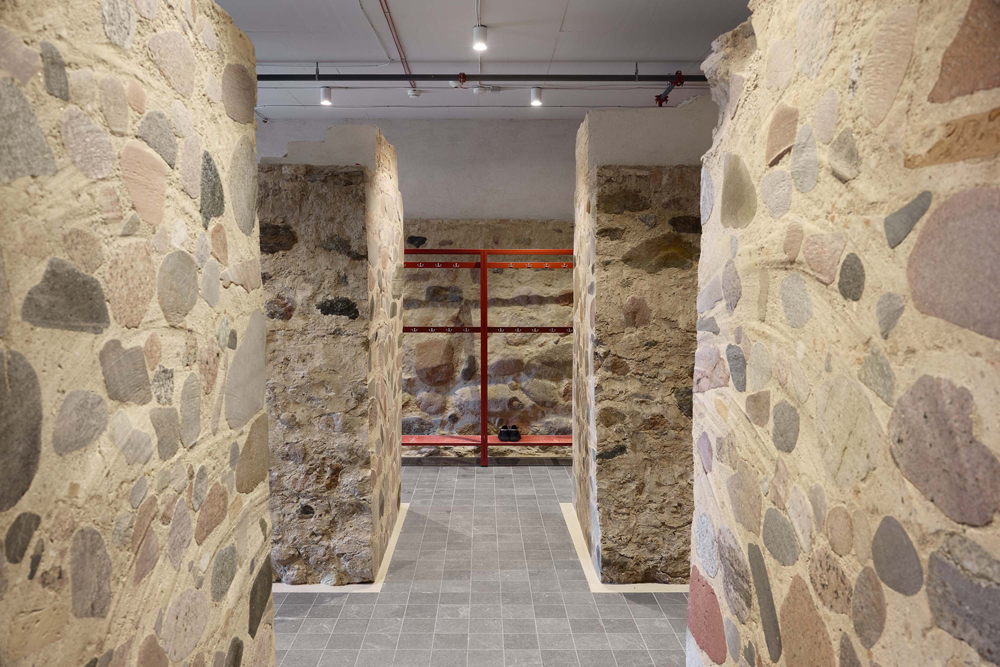
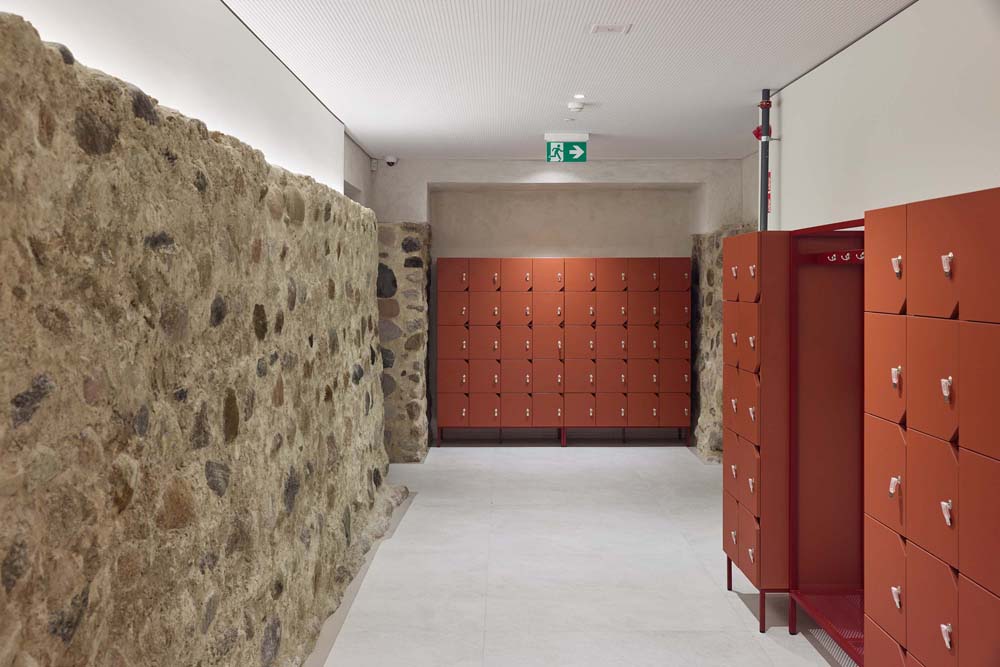
Sienos čia tampa edukacine priemone, perteikiančia laiką, sluoksnius, atmosferą. Senojo riedulių mūro (260 m²), plytų (280 m²) ir net 910 m² tinkuotų paviršių istorijos sugyvena su naujais sprendimais. Net senų komunikacijų pėdsakai čia palikti kaip tylios, bet reikšmingos žinutės – apie tai, kas buvo, kad geriau suprastume, kur einame.
Erdvės mokymuisi, bendravimui ir atradimams
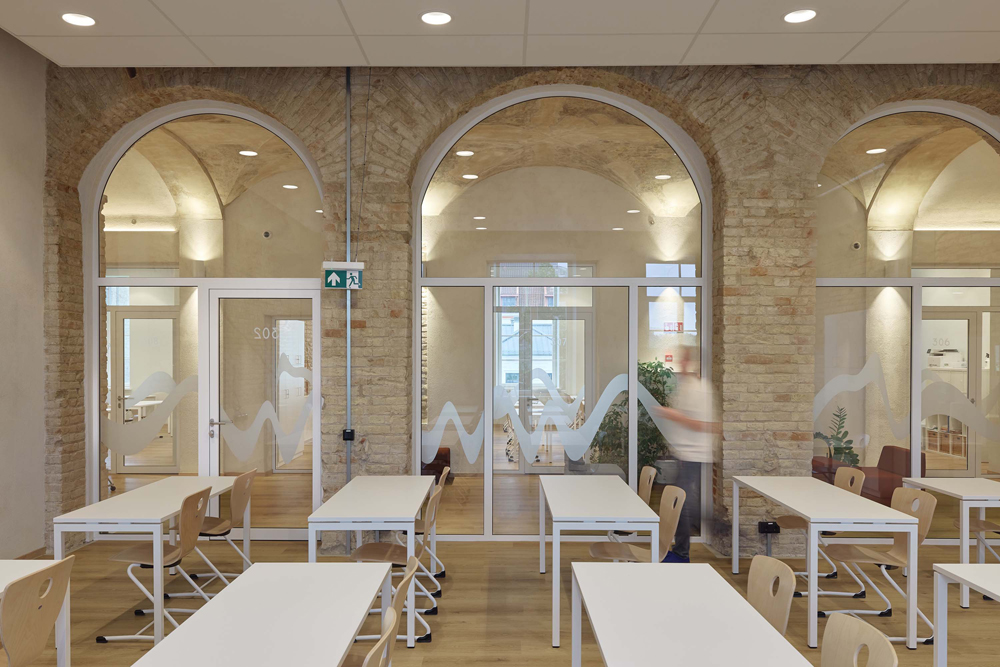
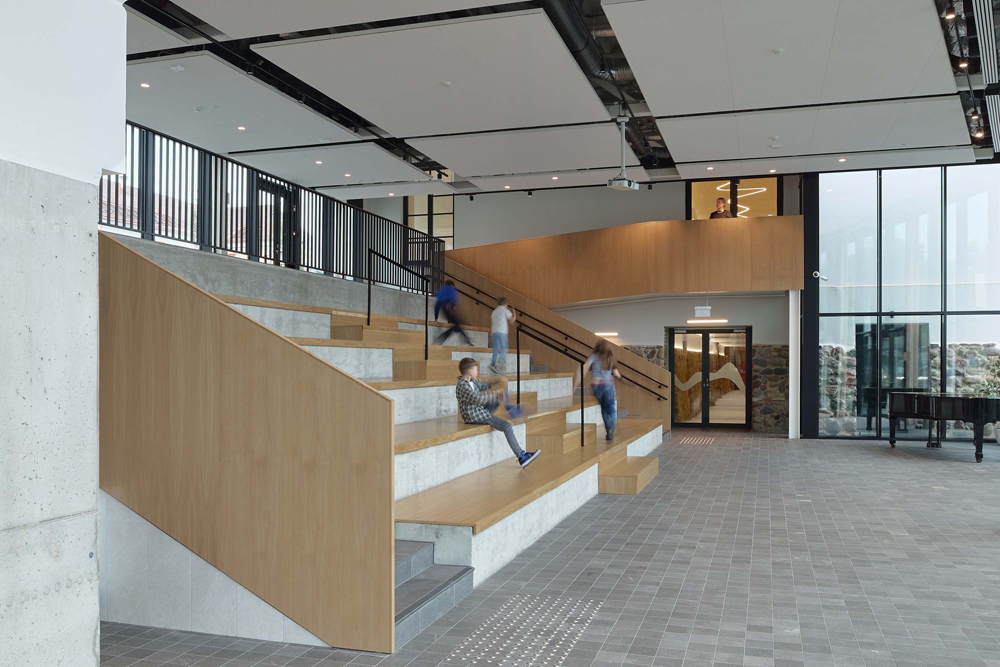
I–II aukštai: klasės, koridoriai ir universalios zonos jungiasi į vieningą sistemą, kurioje mokymasis vyksta visur. Erdvių kaita skatina skirtingų amžiaus grupių bendravimą, o centrinė interjero ašis – vingiuojantis „gyvatės“ formos šviestuvas – veda nuo vienos patirties prie kitos.
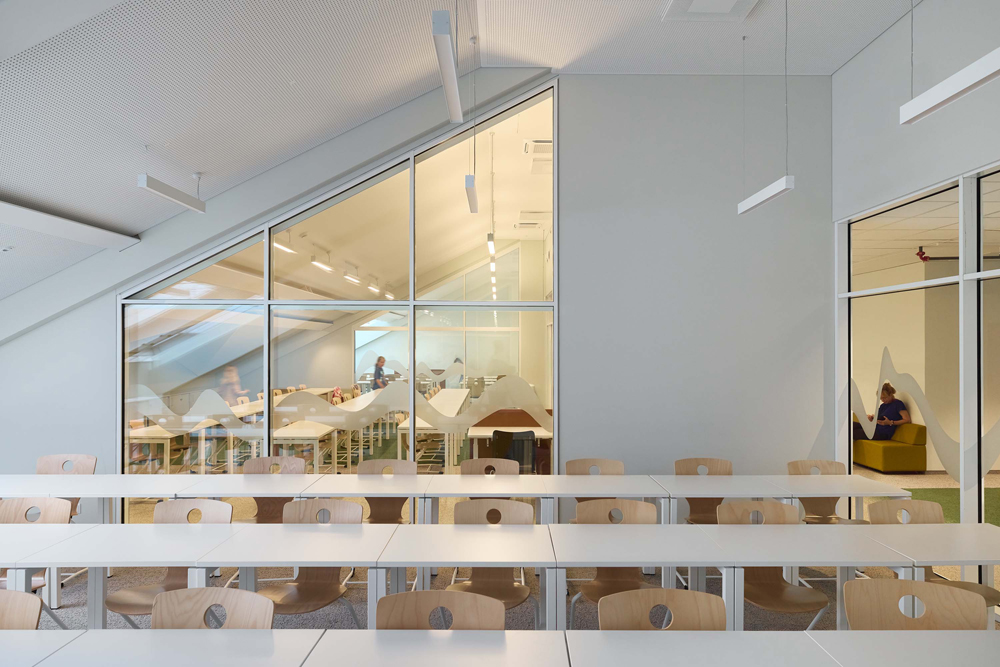
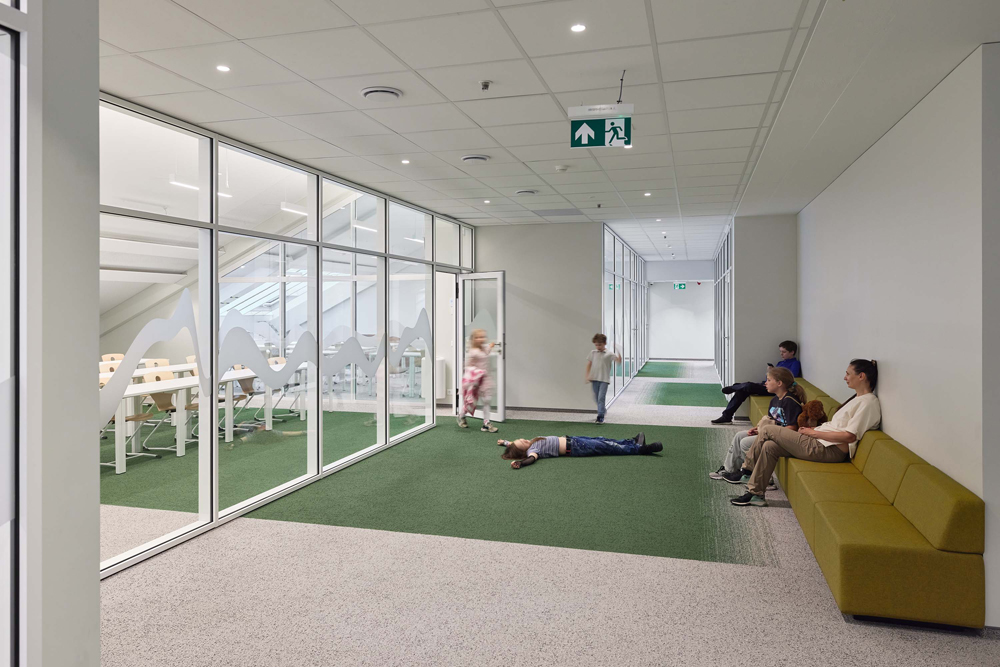
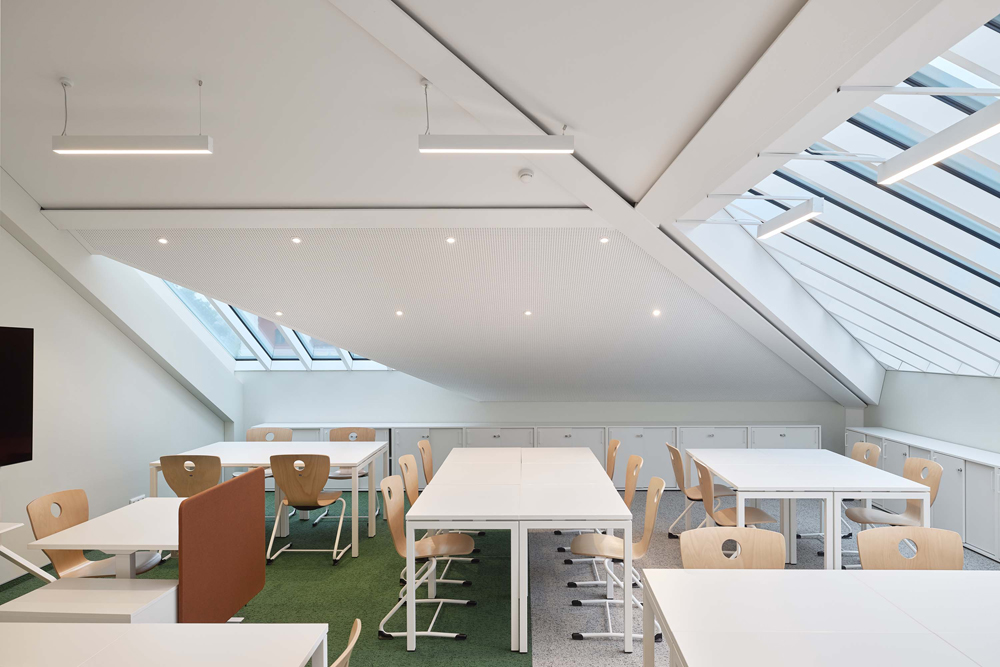
III aukštas: stiklinės pertvaros išlaiko atvirumo jausmą, o žalios spalvos akcentai ramina. Akustika, išdirbta su specialistais, užtikrina komfortą net po šlaitinėmis lubomis.
Cokolis: čia eksponuojamas autentiškas riedulių mūras, matomos ir pokario sienos. Cementas pakeistas kalkiniu tinku, įterpta mikrocemento juosta su plytelėmis. Tai – ne tik istorinis muziejus, bet ir aktyvi kūrybinė erdvė.
Projektų erdvė – spalvų laboratorija
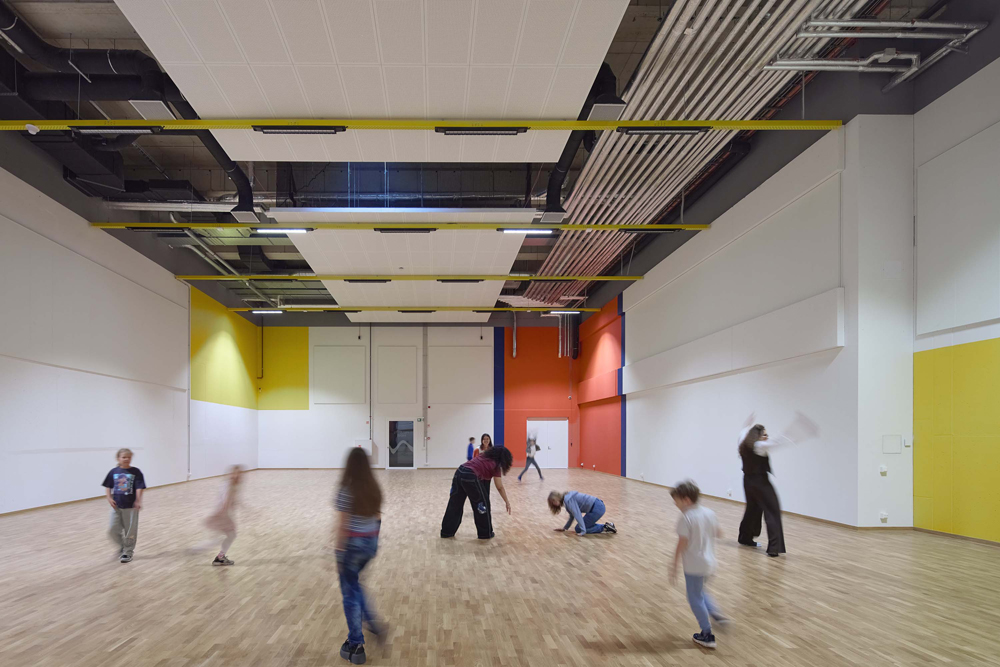
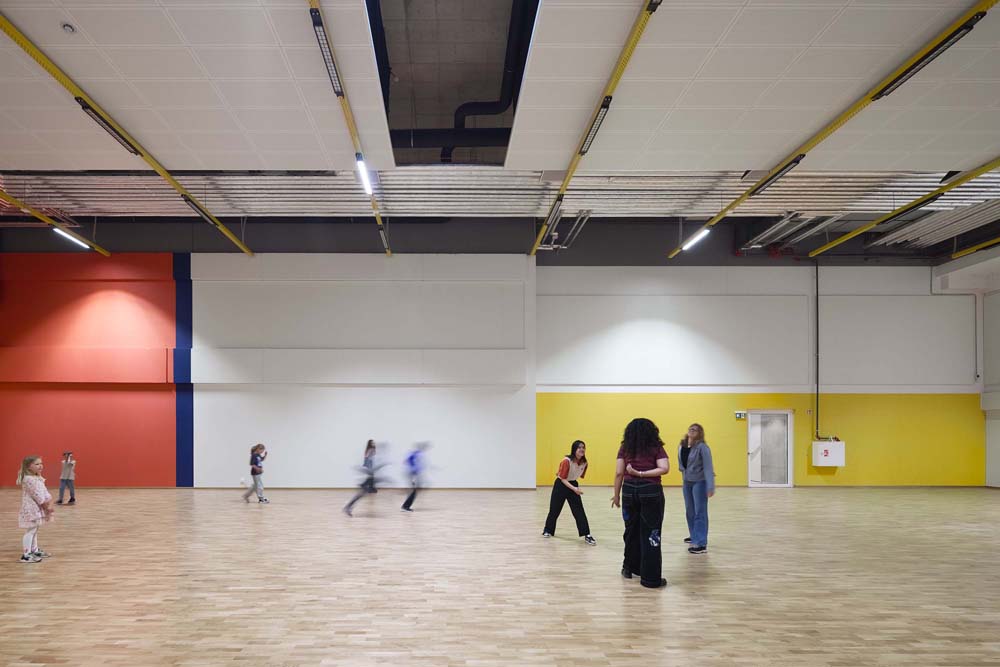
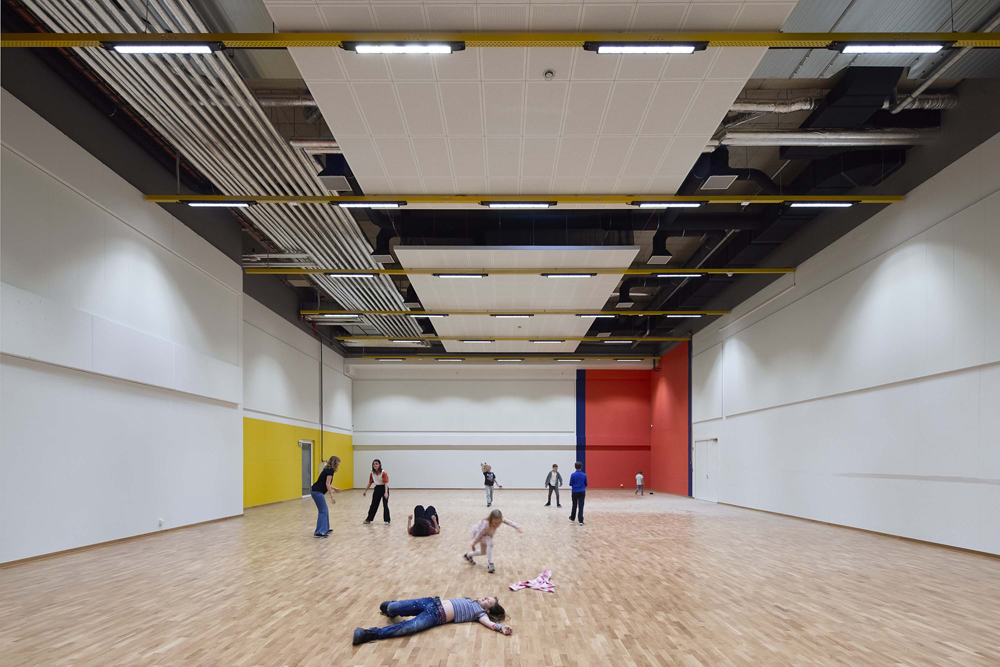
Salė, įkvėpta Piet Mondrian kūrybos, – raudona, geltona, mėlyna – tampa energijos šaltiniu. Spalva čia matoma net lubose: šviestuvų profiliai kuria grafiką ore. Erdvė pritaikyta sportui, dirbtuvėms ir scenos menams – tiek vizualiai, tiek akustiškai.
Amfiteatras ir kavinė – širdis, jungianti visus
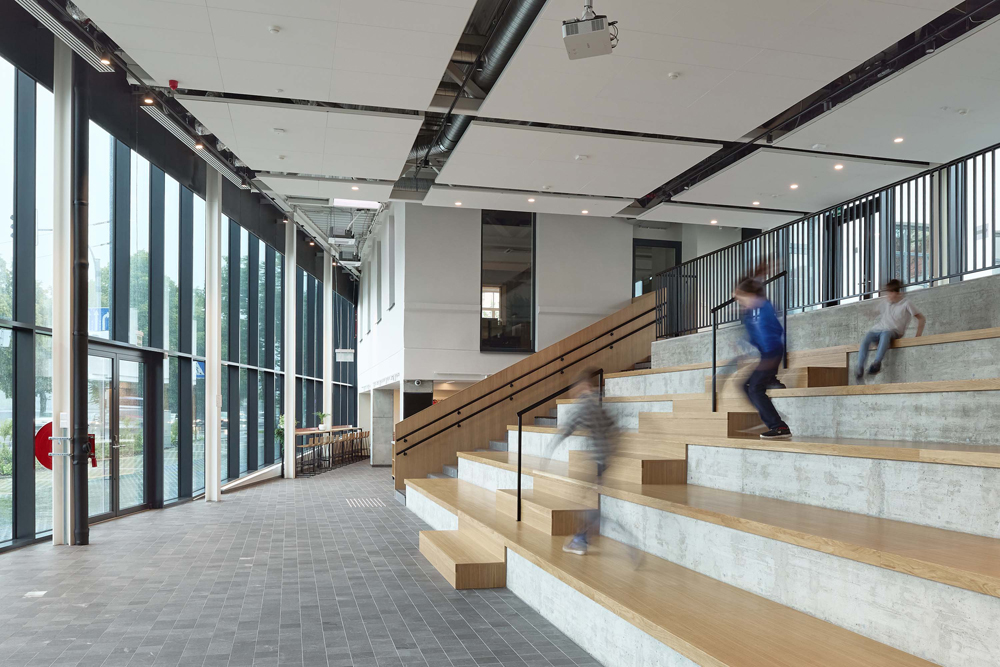
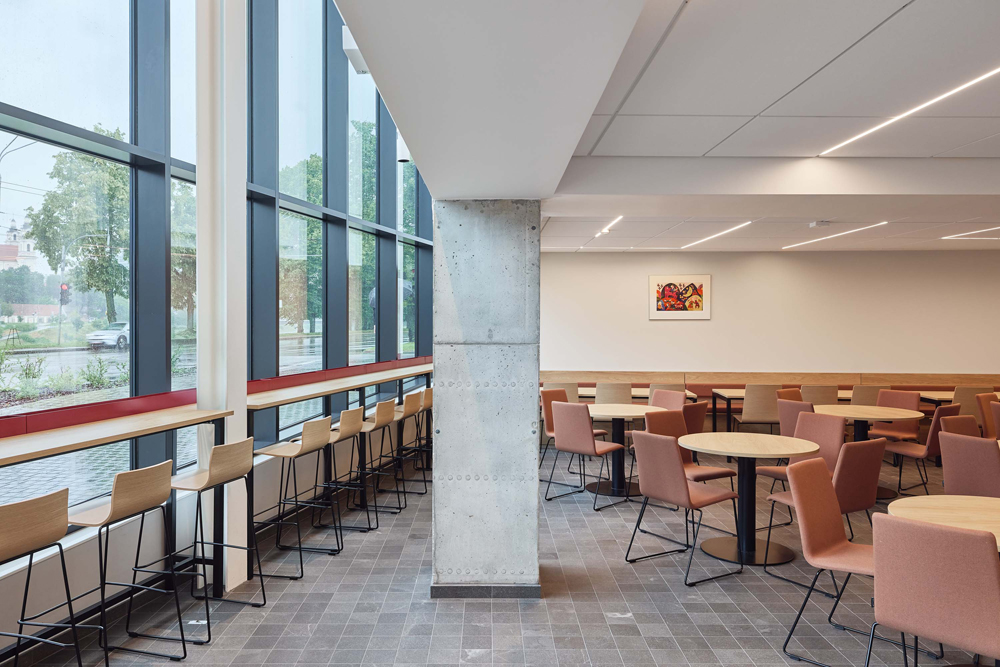
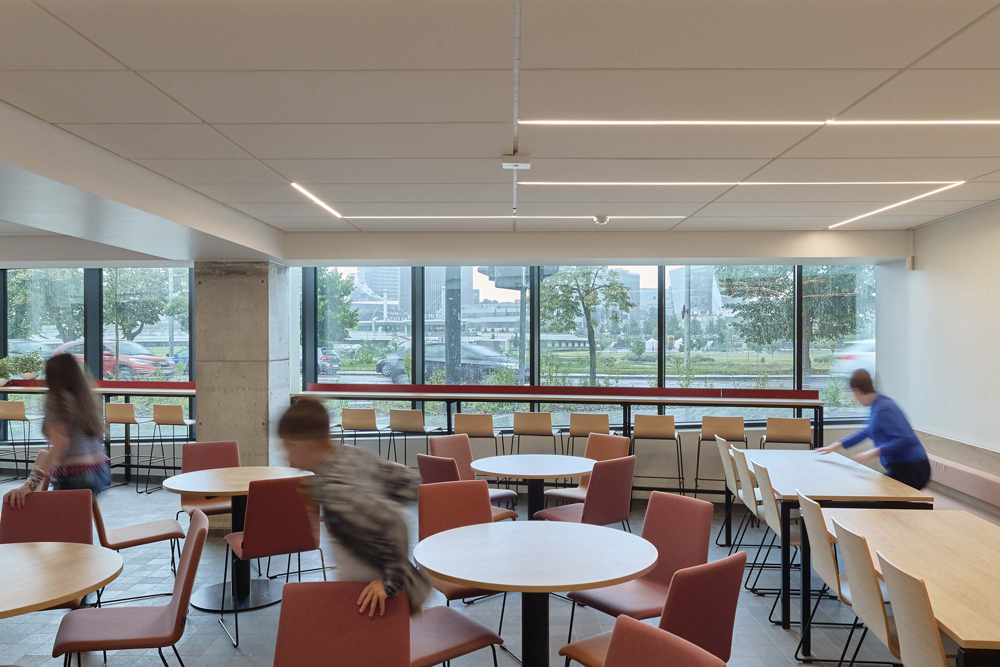
Per stiklines sienas atsiveria vaizdai į upę ir kiemą – tai erdvė, kur susitinka mokykla, miestas ir gamta. Amfiteatras talpina apie 130 žmonių – jame vyksta renginiai, pokalbiai, pietūs ar tiesiog tylus buvimas.
Mokykla, kuri augina žmogų
Šiuolaikinės Mokyklos Centras – tai daugiau nei pastatas. Tai idėja, kuri skleidžiasi per architektūrą, spalvas, garsus ir erdves. Tai vieta, kur istorija ne konkuruoja su dabartimi, o ją papildo, kur spalva ne tik džiugina, bet ir ugdo, o kiekvienas sienos kampas gali tapti pamoka.
Tai mokykla, kuri skatina bendruomeniškumą, kūrybiškumą ir drąsą būti savimi.
ŠiMC – Šiuolaikinės Mokyklos Centras Interior: When Architecture Speaks in History, Colors, and Music
When five architects from ArchDesign x AForm Studio began designing ŠiMC, their goal was not simply to “do an interior.” Within six months, a 3,100 m² space was designed where more than 490 students and 50 teachers live and learn every day. This is not just classrooms—it is a living, breathing organism with two floors, an attic, a basement, a project space underground, and even an amphitheater. Every corner speaks about learning—but not just any learning: creative, engaging, interdisciplinary.
As the renowned architect Louis Kahn once said: “The school began when a man under a tree asked a question. Architecture must immortalize that.” That is exactly what has happened here.
The Heart of the Interior – “The Wave of Music”
Here, learning is inseparable from art. Music is not an extracurricular activity, but the very identity of the entire space. The architects drew inspiration from the school’s own musical traditions and translated it into the interior—custom-made suspension lights echo the “wave of music,” setting the rhythm that the whole school breathes in.
Colors that Speak the Language of Children
Spaces are tailored to children of different ages—bright, energetic colors dominate in areas for the younger ones, while more subtle tones help older students focus. Even the restrooms are full of color—because here, color is not just decoration, but the emotional language of architecture that nurtures, delights, and sparks curiosity.
Walls that Tell Stories
Together with architect Aušra Gvildienė, the team decided not to conceal history—but to reveal it. Old bricks were uncovered, traces of staircases preserved, window openings restored, and lime plaster used was the same used in the Sapieha Palace renovation project. These solutions let the walls “breathe,” while also creating unique acoustics.
Here, walls become an educational tool, conveying time, layers, and atmosphere. The old boulder masonry (260 m²), brickwork (280 m²), and 910 m² of plastered surfaces coexist with new solutions. Even traces of old utilities were left as silent yet meaningful messages—reminders of what once was, so we better understand where we are going.
Spaces for Learning, Interaction, and Discovery
Floors I–II: classrooms, corridors, and multifunctional zones form a unified system where learning happens everywhere. The shift of spaces encourages interaction among different age groups, while the central interior axis with wavy suspension lights guides students from one experience to another.
Floor III: glass partitions preserve the sense of openness, while green floor color provides calm. The acoustics of the classrooms were calculated with the specialist's help to ensure comfort under the sloped ceilings.
Basement: authentic boulder masonry is displayed. Cement mortar was replaced with lime plaster, with a microcement band and tiles incorporated. This is not only a historical museum, but also an active creative space.
Project Space – A Laboratory of Colors
Inspired by Piet Mondrian’s work—red, yellow, blue—becomes a source of energy. Even the ceiling is alive with color: lighting profiles create graphics in the air. The space is adapted for sports, workshops, and performing arts—both visually and acoustically.
Amphitheater and Café – The Heart that Unites All
Through glass walls, views open up to the river and the courtyard—this is a space where the school, the city, and nature meet. The amphitheater accommodates about 130 people—hosting events, conversations, lunches, or simply quiet moments.
A School that Nurtures People
ŠiMC is more than a building. It is an idea unfolding through architecture, colors, sounds, and spaces. A place where history does not compete with the present but enriches it, where color not only delights but educates, and where every corner of a wall can become a lesson.
It is a school that fosters community, creativity, and the courage to be yourself.
Baldai iš Narbutas